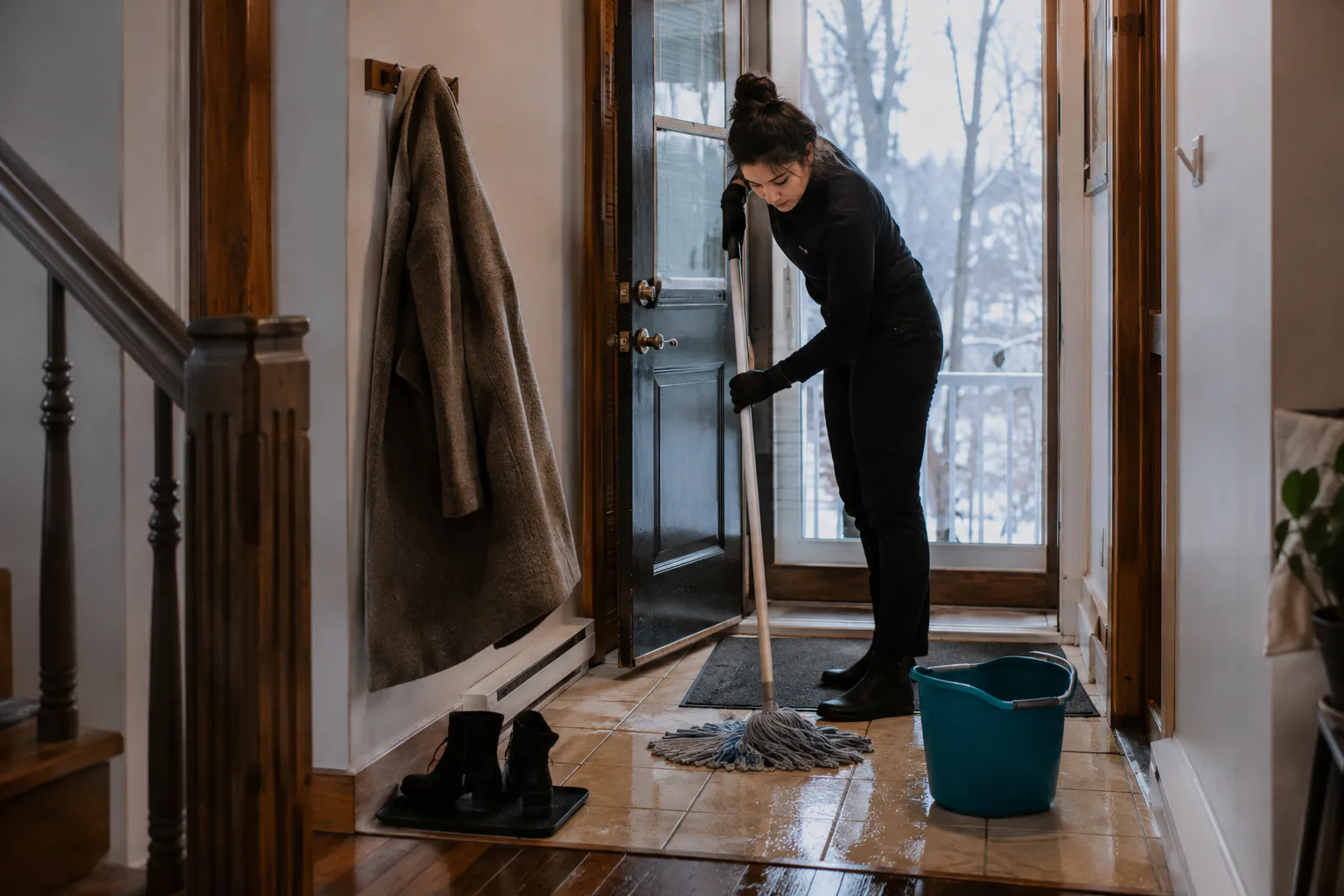
Stop dirt at the door
Two zones work better than one small mat: an exterior or vestibule surface for removing snow, then an absorbent mat for water. Keep boots on a tray that will not overflow.
Sweep or vacuum grit before washing. Repeatedly ground under shoes, it can dull some floors.
- Scraper or mat at the entrance
- Absorbent indoor mat
- Boot tray
- Place to dry accessories
Remove salt without soaking floors
Remove dry particles first. Then use a method suited to the floor and very little water on wood or laminate. Change water once it turns cloudy; otherwise salt is only moved around.
Acidic recipes commonly shared online do not suit every stone, grout, or finish. Confirm the material and recommended care.
- Vacuum first
- Product compatible with finish
- Well-wrung mop
- Water changed often
Match frequency to the weather
After snow or a thaw, a short targeted visit may be more useful than one large weekly clean. In a common area, watch stairs and corridors where water is carried.
Use a small daily routine for puddles and save detailed cleaning for marks left after drying.
- Puddles removed quickly
- Grit vacuumed regularly
- Railings and handles wiped
- Detailed work after heavy weather
Reduce slip risk
A wet floor near a door creates an immediate hazard. Dry the area, keep the mat flat, and replace it when it slips or saturates. In a building, signs may be needed during washing.
The provider should know where to empty dirty water and place equipment without blocking an exit. Entrances remain circulation routes during cleaning.
- Flat, stable mat
- Wet zone monitored
- Exit path clear
- Equipment kept out of the way
Ready to turn this list into a request?
Share your postal code, property type, priorities, and preferred date. You can confirm the details before any appointment.
Get a free quote now — no obligation